
Digital Dentures: A Modern, Faster Approach to Tooth Replacement
What Digital Dentures Are and How They Work
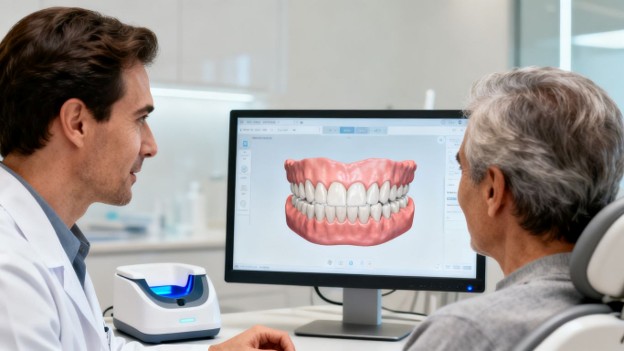
Digital dentures use a computer-guided workflow to plan and produce removable teeth replacements. Instead of relying only on physical molds and hand adjustments, the dental team can combine scans, photographs, measurements, and clinical records in a digital design. The result is still a denture, but the path from examination to finished prosthesis is more digitally organized. For many patients, digital dentures can make the process easier to understand and repeat.
How Digital Dentures Differ from Traditional Dentures
Traditional dentures are commonly developed through a series of physical impressions, wax try-ins, and laboratory steps. Digital dentures add virtual planning and computer-guided manufacturing to that process. This may reduce the need to repeat certain steps, although the exact number of appointments depends on the patient's oral health, treatment plan, and the dental office's workflow.
The term "digital" does not mean that a dentist skips the clinical examination or that the denture is made without adjustments. A dentist still evaluates the bite, gum tissues, facial support, speech, and comfort. The difference is that more of the information can be stored and used in a digital file.
The Scans, Images, and Measurements Dentists Use
A digital denture plan may draw from intraoral scans, facial photographs, existing denture records, jaw measurements, and impressions. The dentist may also assess how the lips are supported and how the upper and lower teeth meet. These details help guide tooth position, denture borders, and the overall appearance of the prosthesis.
Patients replacing an older denture can sometimes bring it to the appointment as a useful reference. Its shape, tooth position, and areas of wear may help the dental team understand what has worked well and what needs to change. Accurate records matter because a digital design is only as useful as the information entered into it.
CAD/CAM Design and Computer-Guided Manufacturing
CAD/CAM refers to computer-aided design and computer-aided manufacturing. In a denture workflow, the design software helps organize the teeth, base, bite, and other planned features before manufacturing begins, and the finished appliance may then be milled or printed using materials selected by the dental laboratory and dentist.
Some labs describe workflows that run from clinical records through final delivery using precision-milled construction, though that description applies to the specific product scope offered, not to every digital denture available from every laboratory. Your dentist can explain which design and manufacturing method is being used in your case.
Why Digital Records Can Make Future Replacements Easier
A digital file can preserve useful information about a denture's design, including tooth arrangement and important measurements. If a denture is lost or damaged, those records may give the dental team a starting point for a replacement rather than requiring the entire process to begin without reference material.
The file is not a promise that a replacement will fit perfectly without an appointment, since mouth tissues change and the old design may no longer suit the patient, but having a clear record can make communication with the dentist and laboratory more efficient.
The Digital Denture Process from Consultation to Delivery
The process begins with a conversation, not a scanner. The dentist needs to understand whether the patient wants a first set of dentures, a replacement, better retention, improved appearance, or support for an implant treatment. The team then gathers the clinical information needed to create and assess a proposed design. Appointments vary from office to office; some cases can use existing records, while others require new impressions, photographs, or several design checks. During the consultation,
the dentist examines the gums, remaining teeth, jaw relationship, and any areas of soreness. If teeth need to be removed, the timing of extractions and the type of temporary or immediate denture must be considered, along with medical history, dry mouth, and previous denture experience.
Discussing priorities early gives the dentist a better basis for recommending a complete denture, an implant-retained option through our Dental Implants services, or another approach from our Options for Missing Teeth.
Digital impressions use an intraoral scanner to capture the shapes of the tissues and nearby structures, though conventional impressions or existing records remain useful in some cases, particularly when the anatomy is difficult to scan. Before manufacturing, the dental team can review a virtual arrangement of the teeth and base, allowing discussion of tooth shade, tooth position, smile display, and facial support.
A virtual preview is helpful, but it is not the same as wearing the finished denture, so questions are most useful when they are specific, such as whether the front teeth show enough during a smile or whether the bite feels balanced. After the design is approved, a dental laboratory manufactures the denture using the selected digital method and material, and the dentist then checks its fit, bite, appearance, and stability in the mouth.
Even a carefully designed denture may need small adjustments because living tissues are not perfectly static, and a comfortable final result depends on both the manufacturing process and the clinical fitting appointment.
The Benefits of Choosing Digital Dentures
Digital dentures can offer practical benefits, especially when a patient is replacing an existing appliance or needs a repeatable record. They may also make communication between the dental office and laboratory more organized, though benefits vary according to the patient's anatomy, the quality of the records, and the experience of the clinical team.
The technology is best understood as a workflow rather than a guarantee: it can improve consistency in some stages, but it cannot eliminate healing, tissue changes, or the need to learn how to use a new prosthesis. Some workflows are designed to reduce repeated physical steps, which may shorten the process for certain cases, though the actual schedule depends on whether extractions, implants, or tissue healing are involved.
Digital planning can also help the team consider the bite, tooth position, and facial support together, but comfort is not created by software alone; the borders must suit the mouth and sore areas must be addressed.
A stored digital record can be useful when a denture is broken or misplaced, since the dentist and laboratory may be able to refer to the previous design, although the replacement may still require updated scans since gum shape, bone support, and bite can change over time. Digital planning also gives the team a chance to inspect the proposed design before the final appliance is made. Predictability still depends on the records, the treatment plan, and the quality of the final fitting, so the dentist should explain what level of precision is realistic for your case.
Types of Digital Dentures to Consider
"Digital dentures" describes how a denture is planned and made, not just one single type of appliance. A patient may receive a complete removable denture, an implant-retained denture, an immediate denture, or a conventional removable denture created with digital records, and the right choice depends on the condition of the mouth and the patient's goals.
Complete digital dentures replace all teeth in one arch or, when needed, both arches, restoring chewing, speech, lip support, and appearance without relying on natural teeth for retention; this may be appropriate for someone who has already lost all teeth or whose remaining teeth cannot be predictably restored.
Implant-retained dentures attach to dental implants that support or retain the removable appliance and can reduce movement during speaking and chewing compared with a tissue-supported denture, although they still require maintenance and careful cleaning, and the number and position of implants, available bone, and medical history all affect candidacy.
Immediate dentures are delivered around the time teeth are removed, allowing the patient to avoid being without teeth during healing, though because the tissues change as they recover, an immediate denture commonly needs adjustments, relining, or eventual replacement.
A conventional removable denture can still be made through a combination of traditional and digital steps, for example when the dentist uses physical impressions or existing dentures and then sends those records for digital design or manufacturing; what matters most is that the selected workflow captures the patient's anatomy accurately and allows the dentist to verify the completed appliance in the mouth.
Who May Be a Good Candidate for Digital Dentures
Digital dentures may suit many people who need full-arch tooth replacement, but candidacy is not determined by technology alone. The dentist must consider the health of the mouth, the patient's expectations, the condition of any existing denture, and whether implants are part of the plan. Patients should also share practical concerns, such as difficulty removing a denture or discomfort during long periods of wear, since these details can shape the design and follow-up recommendations.
Someone who has worn dentures before may be a strong candidate for a digitally planned replacement, especially if the current set has a familiar tooth arrangement worth preserving, since existing dentures can provide useful information about fit, wear, speech, and appearance. The dentist will also look for reasons the old denture no longer works well, since weight loss, bone changes, or an altered bite may mean that copying the old design would repeat the same problem. First-time denture wearers can also receive a digital denture, but they need extra guidance about what the experience will feel like, since a new denture changes how the tongue, cheeks, lips, and jaw coordinate during speech and chewing.
Implants may be considered when a removable denture lacks stability or when the patient wants more support during chewing, though they require adequate bone, healthy tissues, and a willingness to maintain the implants. Active gum disease, untreated infections, severe dry mouth, or difficulty caring for an appliance may affect the timing of treatment, though these issues do not always rule out digital dentures. Honest information about medications, smoking, and previous treatment helps our team, led by Dr. Trason Shoquist, build a safer and more useful plan.
What to Expect After Getting Digital Dentures
Receiving the denture is the start of adaptation, not the end of care. Most patients need time to learn new speaking and chewing movements, and many benefit from at least one follow-up visit. Soreness, looseness, or a change in the bite should be reported rather than ignored. Speech may sound different for a short period, particularly with sounds that involve the tongue touching the front teeth or palate, and reading aloud in a quiet setting can help.
Eating is usually easier when patients begin with soft foods cut into small pieces. A denture that repeatedly slips, causes gagging, or produces significant pain may need adjustment; do not try to reshape it at home, since removing material can permanently change the fit or bite.
Clean the dentures daily with a denture brush or another recommended method, avoiding very hot water, and store them as your dentist instructs when they are out so they do not dry out or reach children and pets. A denture may need an adjustment when it creates a sore spot, feels loose, or affects speech; relining can sometimes improve the fit after the mouth has changed, though a severely worn denture may need replacement instead.
There is no single lifespan that applies to every denture, since wear, changes in the gums and jawbone, and overall health all affect how long an appliance remains useful, so regular dental examinations help identify when relining, adjustment, or replacement is appropriate. If you would like to discuss whether digital dentures are right for you, our Contact page has everything you need to schedule a consultation.
Conclusion
Digital dentures bring scanning, virtual planning, and computer-guided manufacturing into a treatment that still depends on careful examination and personal fitting. They may simplify records, support a more organized workflow, and make future replacements easier to plan. The most suitable option—complete, implant-retained, immediate, or conventionally removable—comes from a conversation with a dentist who can match the technology to your mouth and goals.
Frequently Asked Questions
What are digital dentures?
Digital dentures are removable dentures planned and manufactured with digital records and computer-guided design or production methods. The exact workflow can include scans, photographs, measurements, existing denture records, and conventional impressions.
Are digital dentures more comfortable than traditional dentures?
They may be comfortable when the design, fit, bite, and materials are appropriate, but comfort varies by patient. Any denture can require adjustments as the mouth adapts and tissues respond.
How many appointments do digital dentures require?
The number varies with the patient's oral health, whether teeth need extraction, whether implants are involved, and the office's workflow. A dentist can provide an estimated schedule after an examination.
Can digital dentures be made for someone who has never worn dentures?
Yes. First-time denture wearers may receive digitally planned dentures, although they usually need instruction and time to adapt to speaking, chewing, and caring for the appliance.
Can digital dentures be supported by implants?
Yes, digital workflows may be used for implant-retained removable dentures and other implant-related prostheses. Implant candidacy depends on bone, tissue health, medical history, treatment goals, and maintenance needs.
What happens if a digital denture is lost or broken?
Contact the dental office rather than attempting a home repair. If a usable digital record exists, it may help the dentist and laboratory plan a replacement, although current examination and updated records may still be needed.
How should digital dentures be cleaned?
Clean them as directed with a denture-safe method, avoid hot water unless specifically advised, and clean the gums, tongue, and remaining natural teeth. Store the appliance safely when it is not being worn. According to the American Dental Association, dentures should be brushed daily to remove food particles and plaque, and should be kept covered in water when not being worn.
About the Author
Spokane Dental has served the Spokane, Washington area since 2012 from its office at 315 W Hastings Rd. The practice is led by Dr. Trason Shoquist, DMD, a U.S. Army veteran and graduate of Roseman University College of Dental Medicine, who provides preventive, restorative, and periodontal care with a patient-first approach rooted in listening and clear communication.
Disclaimer
The information provided in this article is for educational purposes only and does not constitute professional medical or dental advice, diagnosis, or treatment recommendations. Whether digital dentures are the right option for you can only be determined through an in-person evaluation. Always consult your dentist with any questions regarding your treatment.
Blog Post Author

Contributed by DentalROI
DentalROI provides relevant dental content to help providers educate patients. The statements, services, and products referenced in this article have not been evaluated by the Food and Drug Administration, and they are not intended as a substitute for professional medical advice, diagnosis, or treatment. Always seek the advice of your dental provider with any questions or issues you may have. Specific recommendations may vary in different circumstances, so individual consultation is important.